
Blogs

The Most Dangerous Day of Hospitalization Is Discharge Day

Discharge Is a Safety Event, Not Just the End of a Stay

For many patients, discharge day is one of the most anticipated days of hospitalization. It is the day they finally get to go home. But from a healthcare perspective, discharge is not just the end of a hospital stay — it is one of the high-risk moments in a patient’s recovery.

During hospitalization or inpatient rehabilitation, patients are surrounded by professionals managing medications, monitoring symptoms, assisting with mobility, and making clinical decisions. On discharge day, that responsibility suddenly shifts to the patient and their family.

In a matter of hours, patients go from having a full medical team to manage medications, equipment, mobility limitations, follow-up appointments, and warning signs on their own.

The problem is not that education isn’t provided. Nurses, therapists, and case managers spend significant time reviewing instructions. Patients and families often receive discharge education when they are overwhelmed, tired, and focused on going home, which is the problem.

They may nod in understanding, but the reality of managing care does not fully set in until later — often the first night home.

We should not treat discharge as a paperwork event. It should be treated as a critical safety transition. Many falls, medication errors, complications, and readmissions stem from events or omissions during the transition from hospital to home.

Understanding why discharge is such a high-risk period is the first step in improving patient education, caregiver preparation, and overall safety after hospitalization.

Reasons Patients Feel Overwhelmed During Discharge

By the time discharge day arrives, most patients are physically tired, mentally fatigued, and focused on one thing: going home.

While healthcare providers see discharge as a transition that requires careful instruction and planning, patients often see it as the finish line.

This difference in perspective is where many problems begin.

On discharge day, patients and families are typically given a large amount of information in a short period of time. They may receive instructions about medications, mobility restrictions, equipment use, wound care, follow-up appointments, diet changes, and warning signs to watch for. Often, multiple disciplines — nursing, therapy, case management, and physicians — deliver this information, sometimes within just a few hours.

Even when the instructions are explained clearly, the timing is difficult. Patients may be in pain, tired from therapy, distracted by transportation arrangements, or anxious about how they will manage at home. Families are often trying to listen, pack belongings, arrange the car, pick up medications, and talk to multiple staff members all at once. It is not an ideal learning environment.

Stress also affects how well people absorb information.

Overwhelm reduces people’s ability to process and remember new information.

Patients may nod and say they understand because they trust the healthcare team or because they feel embarrassed to ask questions, but true understanding often isn’t clear until they are home and trying to manage on their own.

This is why many home health clinicians and rehabilitation nurses hear the same statement from patients and families shortly after discharge:


“No one told us that.”


Many times, medical staff explained the information — but they explained it when the patient and family were overwhelmed and unable to fully absorb it.

If we want discharge education to be effective, we must recognize that discharge day is not just an information exchange. It is a high-stress transition where education must be simple, prioritized, repeated, and reinforced over time — not just handed to patients in a folder on their way out the door.

Medication Changes — One of the Biggest Risks After Discharge

Medication changes are one of the most common sources of confusion after discharge. During hospitalization, medications are often adjusted — new ones started, others stopped, doses changed, and schedules shifted. By the time patients go home, their medication plan may look very different from what they were used to before admission. 

At home, this creates risk. Old medications are still in the cabinet, routines are familiar, and it is easy to fall back into previous habits. Patients may take the wrong dose, restart a medication that was stopped, or miss something new altogether. These errors are a common cause of complications and readmissions.

Part of the problem is timing. Medication teaching often happens on discharge day, when patients and families are overwhelmed. Understanding is assumed, but not always clear until they are home and trying to manage on their own.

Clear medication education needs to go beyond a printed list. Patients and caregivers need to know what changed, what to stop, what to continue, and what matters most. They need simple instructions, a clean medication list, and clear guidance on when to call for help.

If medication instructions are not fully understood, the transition home is already at risk.

New Mobility Limitations and Fall Risk

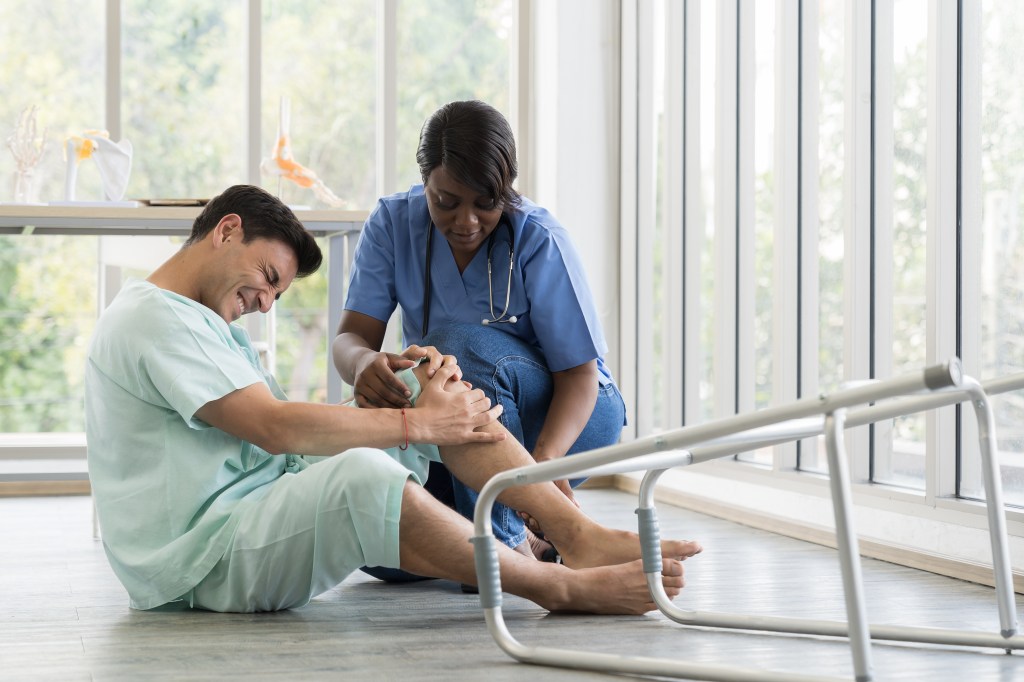
After discharge, many patients are at a higher risk for falls than they realize. During hospitalization or rehabilitation, mobility is supported by staff, equipment, and a controlled environment. At home, that support is suddenly gone. 

The home environment also introduces new challenges — different bed heights, stairs, lack of grab bars, throw rugs, pets, and tighter spaces.

Even patients who were moving well in therapy may struggle more than expected once they are back in their own space.

There is also a common tendency for patients to try to “prove” they are independent. They may attempt to walk without assistance, skip recommended devices, or move too quickly before they are ready. This is when many falls occur — often within the first few days or week after discharge.

Clear mobility instructions are critical. Patients and caregivers need to understand exactly how the patient should move at home, what level of assistance is needed, and when it is not safe to do something alone.

If mobility expectations are unclear, the risk of falls increases quickly during the transition home.

Medical Equipment and Care Tasks Families Must Suddenly Learn

At discharge, patients and families are often expected to quickly learn how to manage new equipment and care tasks that were previously handled by healthcare professionals. This may include using walkers or wheelchairs, managing braces, administering oxygen, performing wound care, or handling more complex needs such as feeding tubes, catheters, or tracheostomies.

While instruction is typically provided, the pace of learning is fast, and the expectations are high.

Families are not only trying to understand how to perform these tasks, but also when to do them, what is normal, and what may signal a problem.

This is why return demonstration is critical. It is not enough to explain or show a task — patients and caregivers must demonstrate consistently that they can safely perform it before leaving. Without this step, uncertainty often follows them home, increasing the risk of complications and avoidable readmissions.

Follow-Up Appointments and Knowing Who to Call

After discharge, patients are often responsible for coordinating multiple follow-up appointments, including primary care providers, specialists, therapy services, and home health. While these plans are typically outlined, the details can quickly become confusing once patients return home.

One of the most common challenges is not knowing who to call for what. Patients may be unsure whether a symptom should be directed to their primary care provider, a specialist, home health, or emergency services. This uncertainty can lead to delayed care, unnecessary emergency visits, or worsening conditions.

Clear discharge education should include not only a list of follow-up appointments, but also simple guidance on who to contact for specific concerns. When patients and families know exactly where to turn, they are more likely to act quickly and appropriately — improving safety and continuity of care.

One of the most effective ways to support patients and families is to provide clear, simple guidance on when and who to call.For example, a structured “When to Call” tool can help families quickly decide whether to contact their provider, reach out to home health, or seek emergency care.

Tools like this reduce hesitation, improve response time, and increase confidence during the transition home.

The Communication Gap Between Hospital and Home

One of the most common challenges after discharge is the gap between how education is delivered in the hospital and how care is actually managed at home. In the hospital, patients are supported by a full team. At home, they are expected to apply that information independently, often in a completely different environment.

This is why home health clinicians frequently find themselves re-teaching the same information shortly after admission.

Families often say, “No one told us that.” In many cases, the information was provided — but it was given at a time or in a way that didn’t fully translate to real-life care.

Effective discharge education must account for this gap. It should be simple, clearly prioritized, and written in a way that patients and caregivers can easily reference and use at home. When education is designed for real-life application — not just delivery — patients are better prepared, and outcomes improve.

How Better Discharge Education Reduces Readmissions

Reducing readmissions is not just about clinical care — it is closely tied to how well patients and families understand what to do after they leave. When discharge education is clear, practical, and reinforced, patients are more likely to follow the plan and respond appropriately to changes in their condition.

Effective discharge education includes strategies such as teach-back and return demonstration to confirm understanding, not just delivery.

Written instructions should be in plain language, with a clear medication list, simple mobility guidelines, and specific direction on when and who to call. Caregivers should be involved in the process before discharge, not after problems arise at home.

Just as important, education should not be limited to the day of discharge. When key information is introduced and reinforced over multiple days, patients and families have more time to process, ask questions, and build confidence.

When education is approached as an ongoing process rather than a last-minute task, patients leave better prepared — and the risk of complications and readmissions is significantly reduced.

What Effective Discharge Education Looks Like

If discharge is one of the highest risk points in care, then education at discharge must be structured, consistent, and designed for real-life use — not just delivered and documented.

Effective discharge education goes beyond general instructions. It provides patients and caregivers with a clear, practical plan they can follow once they are home.

At a minimum, this should include:

  1. A mobility plan — what the patient can safely do and what to avoid
  2. A medication plan — what to take, when, and why
  3. Equipment training — how to safely use any devices or supplies
  4. Warning signs — what changes to watch for
  5. Who to call — clear direction for questions or concerns
  6. A follow-up plan — appointments and next steps
  7. Caregiver training — ensuring support systems are prepared
  8. Written instructions in plain language — easy to reference at home

When these elements are clearly defined and consistently delivered, patients are better prepared to manage their care, caregivers feel more confident, and the risk of complications decreases.

Discharge education should not rely on memory or assumption. It should function as a simple, reliable system that supports patients in the moments that matter most — when they are at home and on their own.

Supporting Safer Transitions Home

Discharge is one of the most vulnerable moments in healthcare. Patients and families leave the structure of the hospital and are suddenly expected to manage medications, mobility limitations, equipment, appointments, and warning signs on their own.

When education is rushed or unclear, confusion follows patients home — increasing the risk of falls, medication errors, complications, and readmissions.

Effective discharge education must go beyond simply giving instructions. It must be clear, practical, reinforced over time, and designed for how care actually happens at home.

Because the true measure of patient education is not what was explained in the hospital —
it is what patients and families are able to safely manage once they leave it.


How I Help Healthcare Organizations

I help rehabilitation hospitals, home health agencies, and healthcare organizations create clear, practical patient and staff education designed for real-world care transitions.

My work focuses on:

  • Discharge education
  • Fall prevention communication
  • Patient and caregiver education
  • Staff education materials
  • Rehabilitation and home health content
  • Plain-language clinical communication

As a rehabilitation nurse with more than 20 years of clinical experience, I understand both the realities of patient care and the communication gaps that often appear during transitions home.

If your organization needs clearer, more effective education materials that support patient safety, compliance, and continuity of care, I’d love to connect.

Blogs

When the Weather Warms, So Do Our Children

A Seasonal Reset for Growing Bodies

By the end of Marchbeginging of April, something begins to shift.
The air softens. The snow recedes. The sun lingers a little longer in the evening sky. And almost instinctively, children begin drifting back outside.

It isn’t just play.
It’s a reset. Something our bodies crave, something we all need. 

After months of winter routines, heavier coats, and more time indoors, spring offers something deeper than fresh air. It offers movement. Space. Possibility.

As a parent, grandparent— and as a nurse — I’ve seen how powerful that shift can be.

Movement Reawakens the Developing Brain

Children are designed to move. When winter limits outdoor play, physical activity often drops, and with it, important neurological stimulation.

Research shows that movement increases blood flow to the brain, supports memory formation, and improves attention. Running, climbing, and biking activate multiple sensory systems at once, helping children integrate balance, coordination, and focus.

When kids return outside in spring, their brains begin working differently again — more alert, more flexible, more ready to learn.

This isn’t accidental. It’s biological.

Sunlight Restores Sleep and Emotional Balance

During the darker winter months, many children experience subtle disruptions in their circadian rhythms. Less sunlight can interfere with melatonin production, affecting sleep quality and emotional regulation.

Spring sunlight helps reset the internal clock.

More time outdoors during daylight hours supports:

  • Better nighttime sleep
  • Improved mood
  • Reduced irritability
  • Increased daytime energy

Parents often notice it first at bedtime: easier routines, fewer struggles, deeper rest.

That’s physiology at work.

Nature Reduces Stress in the Nervous System

Modern childhood carries more stimulation than ever — screens, schedules, expectations, noise.

Nature provides something different: regulation.

Studies consistently show that time outdoors lowers cortisol (the body’s primary stress hormone) and activates the parasympathetic nervous system — the system responsible for calm, digestion, and emotional safety.

When children dig in dirt, watch clouds, or explore trails, their bodies are shifting out of “alert mode” and into “rest and restore.”

That’s why outdoor play often leads to fewer meltdowns and more emotional resilience.

Unstructured Play Builds Executive Function

Executive function includes skills like problem-solving, impulse control, planning, and emotional regulation. These abilities develop through experience — not lectures.

Unstructured outdoor play is one of the most powerful training grounds.

When children invent games, negotiate rules, build forts, or adapt to changing situations, they are strengthening these higher-level brain systems. They are practicing life. Without realizing it.

Social Connection Happens More Naturally Outside

Many parents notice that difficult conversations become easier during walks, bike rides, or backyard play.

There is science behind that, too.

Movement reduces defensive responses in the brain and increases oxytocin — the hormone associated with trust and connection.

Side-by-side activity feels safer than face-to-face pressure.Outdoors, children open up.

A Gentle Faith Reflection

As I have watched children run back into spring throughout the years, I’m reminded that this design is intentional.

God created bodies meant to move.
Minds meant to explore.
Hearts meant to rest in creation.

Nature is not separate from learning.
It is part of it.

Every scraped knee, muddy shoe, and sun-flushed cheek tells a story of growth.

Practical Ways to Invite More Outdoor Time

You don’t need elaborate plans.

Small choices make a differnece and count:

  • After-dinner walks
  • Chalk on the driveway
  • Backyard reading blankets
  • Nature scavenger hunts
  • Screen-free afternoons

Consistency matters more than perfection.

A Closing Invitation

Spring will pass quickly. So will this version of your child.

I’m glad you’re here. We’re walking this season together. Keep working hard and moving forward. You’ve got this!

Blogs

Why Fall Prevention Education Fails — and What Works Instead

Despite extensive fall-prevention education, inpatient falls remain stubbornly common in hospitals. This article examines why compliance-driven approaches often fail and how behavior-based strategies can better reduce fall risk and improve patient safety.

picture of a person falling

Falls are still one of the most  persistent patient safety challenges facing the U.S. healthcare system.

  • Despite annual competencies.
  • Despite fall risk signs.
  • Despite bed alarms, yellow socks, and documented teaching.

Rates of inpatient falls in U.S. hospitals are generally estimated to range from 3 to 5 falls per 1,000 bed-days, although rates vary depending on unit type and patient population.

With estimates ranging from hundreds of thousands to nearly one million falls each year, inpatient falls remain a common clinical problem and a significant source of preventable injury.

Pediatric inpatient fall rates are typically lower than adult rates but remain clinically important, with estimates ranging from 0.4 to 3.8 falls per 1,000 patient-days.

The question is not whether we are educating, because we are.

The question we should be asking is:

  • Is our approach to fall prevention education appropriate to the reality of how falls occur?

Falls continue to occur in hospitals not because fall prevention efforts are absent, but because the way fall prevention education is commonly delivered does not match the behavioral realities of how falls actually occur.

The Real Reasons Fall Prevention Education Fails

1. Compliance Training Is Not the Same as Bedside Behavior

Annual modules and policy reviews document our adherence to the procedures and protocols we endorse. What they do not capture is the influence of the real-time judgments and actions clinicians make at the bedside.

Most inpatient falls occur during predictable high-risk windows:

  •  Nocturnal toileting hours (2200–0600) when lighting is reduced and staffing levels are lower.
  • Immediately after medication administration, particularly sedatives, antihypertensives, and opioids.
  • Post-therapy fatigue, especially in rehabilitation settings where patients may overestimate their endurance following therapy sessions.
  •  Shift transitions, when communication gaps or competing priorities may briefly reduce direct observation.

Effective fall prevention education must recognize these patterns and reframe fall prevention from a standardized list of precautions into an understanding of the actual risk windows.

For example, a patient who ambulated safely with therapy at 1400 may be significantly more unstable at 2100 after medication administration and cumulative fatigue.

Education that ignores these predictable risk patterns cannot effectively influence behavior.

Effective fall prevention education must therefore emphasize high risk times, not simply that risk exists.


Formal learning can never compete with the realities of bedside care.

The urgency of the work. Medical staff are busy.
The constant juggling of multiple priorities.
The fatigue that accumulates over a long shift.
And the inevitable lapses in concentration caused by continual interruptions.

According to the literature, multifaceted, system-level fall prevention interventions are more effective than educational interventions focused on a single cause.

In other words, even well-designed educational programs cannot reliably reduce fall rates if they operate in isolation from the workflow and the realities of patient care.

Annual modules and policy reviews confirm that we have documented the procedures and processes we endorse. What they do not reflect is the impact of the real-time decisions clinicians must make while managing a variety patient needs.

Education may support safe practice.

But it cannot replace the operational environment in which decisions are made.

2. Generic Education Misses Patient-Specific Risk

“We consider you a fall risk.”

This phrase appears in thousands of patient charts every day. Yet it often fails to resonate with the patient hearing it.

Why?

Because it lacks specificity.

Generic education assumes that simply informing patients they are a fall risk will influence behavior. In reality, fall risk is rarely perceived the same way by the patient as it is by the clinical team.

One important reason is that many patients at risk for falls are also experiencing cognitive changes that affect their perception of safety and ability.

Patients rarely fall because they do not understand that falling is dangerous.

More often, they fall because their internal assessment of their abilities does not match their actual physical capacity.

Several common clinical conditions contribute to this mismatch:

  • Delirium, where attention, awareness, and judgment fluctuate throughout the day.
  • Post-stroke impaired insight, particularly with right hemisphere injury, which can reduce awareness of weakness or balance deficits.
  • Medication-related cognitive slowing, especially with sedatives, opioids, and some antihypertensives.
  • Executive function impairment, which affects planning, hazard recognition, and impulse control.

For example, a patient experiencing mild delirium may understand fall precautions during morning rounds yet attempt to ambulate independently later when urgency arises.

Similarly, stroke patients may sincerely believe they can transfer safely despite significant weakness.

In these situations, education alone cannot correct the problem. The issue is not a lack of instruction — it is a mismatch between perceived ability and actual capacity.

Effective fall prevention therefore requires more than general warnings. Education must connect risk directly to the patient’s specific condition and circumstances.

Evidence shows wide variability in fall rates across unit types, underscoring that fall risk is contextual rather than universal.

When education is generic, patients often filter it out as routine hospital language.

Specific explanations are far more meaningful.

For example:

“Because your blood pressure drops when you stand and your right leg is weaker today, your brain may not react quickly enough if you lose balance.”

Specific risk is a believable risk.

3. Tools and Alarms Do Not Replace Judgment

Bed alarms, fall bracelets, and signage are important safeguards.

But they are not prevention strategies on their own.

Alarm fatigue reduces response urgency.
Over-reliance on technology can also inhibit clinical vigilance.
Staffing patterns such as lapses in concentration or multiple responsibilities influence response time.

When fall prevention is reduced to equipment alone, we unintentionally shift responsibility away from clinical judgment and interdisciplinary decision-making.

Technology can support safety.
It cannot replace situational awareness at the bedside.

4. Adult and Pediatric Falls Are Not the Same Problem

Adult Inpatient Falls

Common contributing factors include:

• Mobility impairment combined with overestimation of ability
• Urgent toileting without assistance
• Sedating medications or blood pressure changes
• Delirium or cognitive impairment
• Post-therapy fatigue in rehabilitation populations

In adult care, falls frequently occur during ambulation or transfers.

Fall prevention education fails when it focuses only on restricting movement — telling patients “don’t get up” — rather than building structured mobility plans that match the patient’s current functional capacity.

Pediatric Inpatient Falls

Pediatric patterns differ significantly.

Research shows:

• Many pediatric falls occur from beds or furniture.
• A large proportion occur with caregivers present.
• Caregiver fatigue, distraction, and unfamiliar hospital environments contribute to risk.

This changes the target of education.

In pediatric settings, fall prevention education must include:

• Caregiver-specific teaching
• Bed safety practices
• Realistic expectations of supervision
• Acknowledgment of parental exhaustion

Education directed only at the “patient” or without acknowledging caregiver – specifics misses the true behavioral driver.

What Actually Works Instead

Evidence suggests that fall prevention improves when organizations shift from policy-driven education to behavior-based, patient-centered systems.

1. Patient-Specific, Visible Plans

Patient-centered fall prevention tools embedded into clinical workflow — such as visual bedside plans developed collaboratively with patients — have demonstrated measurable reductions in fall rates.

When patients can clearly see:

• Their mobility level
• Required assist level
• Toileting plan
• High-risk times for instability

They are far more likely to engage in safe behavior.

2. Teach-Back and Return Demonstration

Handouts do not prevent falls.

Demonstration does.

Effective fall prevention education includes:

• Practicing transfers with supervision
• Demonstrating correct call-light use
• Verbalizing assist levels
• Repeating and reinforcing toileting plans

These techniques shift education from information delivery to behavior practice.

Behavior that is practiced is far more likely to be remembered.

For pediatric units:

  • Demonstrating crib safety
  • Teaching safe co-sleeping avoidance
  • Clarifying supervision expectations

Fall prevention is not only about what we teach patients. It is also about how consistently the care team communicates expectations.

3. Cross-Disciplinary Consistency

Falls often occur when messaging differs between therapy and nursing.

If therapy says:

“You’re improving — try more independence.”

But nursing says:

“Call before getting up.”

The patient receives mixed cues.

When guidance differs across disciplines, patients are left to interpret conflicting instructions about their mobility and safety.

Successful programs align:

  • Mobility stage
  • Assist level
  • Language used during handoff
  • Documentation clarity

Consistency reduces decision confusion and reinforces safe behavior.

4. Rehab-Specific Considerations

Rehabilitation settings face unique fall risk challenges.

Patients are expected to mobilize.
Independence is the goal.
Progression requires challenge.

This creates tension between safety and recovery.

In rehab, fall prevention education fails when it:

  • Discourages mobility rather than structuring it
  • Fails to account for fatigue accumulation
  • Ignores toileting urgency after therapy sessions
  • Does not adjust assist levels daily

Rehab-focused prevention succeeds when it integrates:

  • Mobility stage
  • Assist level clarity
  • Planned toileting strategy
  • Instruction reinforced daily
  • Team-wide language consistency

In other words, fall prevention must evolve as the patient progresses.

The MAP-IT Framework for Rehab Fall Prevention

To help organizations translate evidence into practice, one practical way to organize fall-prevention communication is the MAP-IT framework: Mobility stage, Assist level clarity, Planned toileting, Instruction that sticks, and Team consistency. 

The MAP-IT framework is offered as a practical, behavior-based conceptual model to help teams align fall-prevention communication at the bedside; it is not intended to replace existing fall-risk assessment tools or institutional protocols.

M — Mobility Stage

What can the patient safely do today?

Mobility levels should be reassessed daily, particularly in rehabilitation settings where functional ability can change rapidly.

A — Assist Level Clarity

Is assistance required?

• One-person assist
• Two-person assist
• Device required

Assist levels must be communicated clearly and consistently across disciplines so that patients receive the same expectations from every member of the care team.

P — Planned Toileting

Scheduled, proactive toileting reduces urgency-driven falls, one of the most common triggers of inpatient falls.

Anticipating toileting needs decreases the likelihood that patients will attempt independent transfers.

I — Instruction That Sticks

Effective fall prevention education relies on teach-back and return demonstration, including:

• Transfer techniques
• Correct call-light use
• Assist level expectations

Practiced behavior is far more likely to be remembered than instructions delivered passively.

T — Team Consistency

Therapy, nursing, and support staff should use identical language when discussing mobility expectations, assist levels, and safety precautions.

Consistency during handoffs, bedside communication, and documentation reduces confusion and reinforces safe behavior.

Strategic Implications for Healthcare Leaders

Organizations seeking measurable reductions in fall rates should consider:

• Moving beyond reliance on annual education modules
• Embedding patient-specific visual plans at the bedside
• Aligning therapy and nursing communication
• Addressing caregiver behavior in pediatric units
• Targeting high-risk windows rather than relying solely on generic precautions

Fall prevention must be designed as a behavioral system, not simply a documentation task.

Closing Thoughts

Falls are rarely the result of a single lapse.

They reflect how well education, workflow, mobility progression, and team communication align within the care environment.

When fall prevention becomes specific, practiced, visible, and consistently reinforced, it moves from compliance to culture.

And culture reduces harm.

References

Agency for Healthcare Research and Quality. (n.d.). Falls. PSNet.
https://psnet.ahrq.gov/primer/falls

Bouldin, E. L., Andresen, E. M., Dunton, N. E., Simon, M., Waters, T. M., Liu, M., Daniels, M. J., Mion, L. C., & Shorr, R. I. (2013). Falls among adult patients hospitalized in the United States: Prevalence and trends. Journal of Patient Safety, 9(1), 13–17. https://doi.org/10.1097/PTS.0b013e3182699b64

Centers for Medicare & Medicaid Services. (2026). Hospital harm—Falls with moderate or major injury (CMS1017v2).
https://ecqi.healthit.gov/ecqm/hosp-inpt/2026/cms1017v2

Dykes, P. C., Burns, Z., Adelman, J., et al. (2020). Evaluation of a patient-centered fall-prevention toolkit to reduce falls and injuries: A nonrandomized controlled trial. JAMA Network Open, 3(11), e2025889.
https://doi.org/10.1001/jamanetworkopen.2020.25889

Miake-Lye, I. M., Hempel, S., Ganz, D. A., & Shekelle, P. G. (2013). Inpatient fall prevention programs as a patient safety strategy: A systematic review. Annals of Internal Medicine, 158(5 Pt 2), 390–396. https://doi.org/10.7326/0003-4819-158-5-201303051-00005

Morris, R., O’Riordan, S., & O’Connor, M. (2022). Interventions to reduce falls in hospitals: A systematic review and meta-analysis. Journal of Patient Safetyhttps://pmc.ncbi.nlm.nih.gov/articles/PMC9078046/

Parker, M. J., et al. (2020). Characteristics and contributing factors associated with pediatric inpatient falls. Journal of Pediatric Nursinghttps://pubmed.ncbi.nlm.nih.gov/31678678/

Said, C. M., Batchelor, F., & Duque, G. (2021). Pediatric inpatient falls: Risk factors and prevention strategies. Journal of Pediatric Nursinghttps://pmc.ncbi.nlm.nih.gov/articles/PMC8198772/

About the Author

Susan Sears, RN, BSN, CRRN, is a rehabilitation nurse and healthcare writer specializing in patient and staff education systems that improve clarity, compliance, and clinical outcomes. She partners with rehabilitation and home health organizations to develop education strategies that align safety practices with clinical workflow and quality metrics.

Blogs

When Blame Limits Growth

In the previous reflection, I explored blame as a form of protection—often rooted in fear, shame, or a sense of emotional safety. But there is another side to this pattern that deserves attention. Beyond how blame affects relationships, it also shapes what becomes possible for the person who relies on it. This following reflection turns toward the cost: what growth, learning, and opportunity the person who consistently places accountability elsewhere may lose.

Two paths diverging on a quiet road, representing choice, personal responsibility, and growth

How Patterns Reveal More Than Excuses

In healthcare, patterns tell stories. When the same explanation appears again and again, we begin to look beyond the surface and ask what it might be protecting—or quietly costing.

People often discuss blame based on how it affects relationships. Less frequently explored is how it shapes outcomes for the person who relies on it.

When individuals consistently place responsibility elsewhere, growth quietly stalls.

The Missed Opportunity for Learning

I’ve seen this in clinical settings and in everyday life.

  • A test isn’t passed because someone “stole study time.”
  • A promotion isn’t received because “management was unfair.”
  • A relationship struggles because “the other person never changes.”

Each explanation may hold some truth. But when blame becomes the default response, reflection never has space to enter.

From a nursing perspective, learning requires feedback. Healing does too. Without the ability to pause and ask, “What part of this is mine?”, we miss opportunities for change or improvement.

What Chronic Blame Can Cost

Over time, relying on blame can quietly erode forward movement. It may:

  • Limit skill development and learning
  • Undermine trust in professional and personal relationships
  • Reinforce a sense of helplessness or stagnation
  • Strengthen the belief that change is always outside one’s control

Blame can offer short-term emotional relief, but it rarely creates lasting change.

Why Accountability Often Feels Unsafe

Accountability requires discomfort. It asks for humility, self-reflection, and the willingness to tolerate imperfection.

For individuals shaped by early criticism, failure, or harsh consequences, that discomfort can feel overwhelming. Blame becomes a familiar and protective response—not because growth is unwanted, but because vulnerability feels risky.

But tools that once protected us can later limit us.

Accountability, Not Shame

In healthcare, we often talk about internal versus external locus of control. When people believe they have no influence over outcomes, motivation declines and frustration increases.

Accountability, when it feels safe, does not assign shame. It restores.

The question shifts from Who caused this to.. What can I do differently next time?
That shift opens the door to growth, resilience, and learning.

Reclaiming What Is Within Reach

This reflection is not about judgment. Many people who rely on blame are doing the best they can with the tools that life gave them.

But growth begins when we gently reclaim responsibility—not all at once, not harshly, but honestly.

From both a clinical and human perspective, accountability is not about fault. It is about possibilities.

🦋 A Moment for Reflection

  • Where might blame be protecting me from discomfort—but also limiting my growth?
  • What changes when I ask, What part of this is within my control?
  • How might accountability restore, rather than take it away?

About the Author:
Susan Sears is a registered nurse and writer with over twenty years of experience caring for patients and families. She writes for adults and children, drawing from clinical practice and lived experience to explore emotional health, boundaries, empathy, and resilience.

Blogs

Teaching Kids to Manage Emotions: 5 Tips to Support Your Child Through Loss

Children are born without information on handling the many ups and downs of everyone’s life. We all have moments of happiness, excitement, love, and joy intermixed with sadness, despair, disappointment, and grief. 

As parents, we are responsible for teaching our children how to manage their emotions in a healthy way, especially when dealing with grief. Here are five tips to help your child handle the loss of a loved one, a pet, or any other significant change:

  1. Acknowledge the situation: It’s important to recognize that the loss is real to your child. Even if it seems trivial to you, express your concern and validate their feelings.
  2. Ask how your child feels: Children, like adults, experience an array of emotions when dealing with loss. Give your child the opportunity to talk about their feelings, and don’t pass judgment.
  3. Understand the normal stages of grief: The five stages of grief a person may go through are denial, anger, bargaining, depression, and acceptance. These stages can apply to your child, but keep in mind that they’re not always linear or predictable.
  4. Answer any questions your child may have: Children often have questions about death, so be honest and use language they can understand.
  5. Allow your child to mourn in their own way: Everyone grieves differently, so don’t force your child to mourn in a certain way. Let them decide if they want to attend a funeral, how they want to remember their loved one or pet, and whether they want to mourn in private or public.

Remember, your child looks to you for guidance during this difficult time. Let them see that it’s okay to show sadness and express their emotions.