Despite extensive fall-prevention education, inpatient falls remain stubbornly common in hospitals. This article examines why compliance-driven approaches often fail and how behavior-based strategies can better reduce fall risk and improve patient safety.
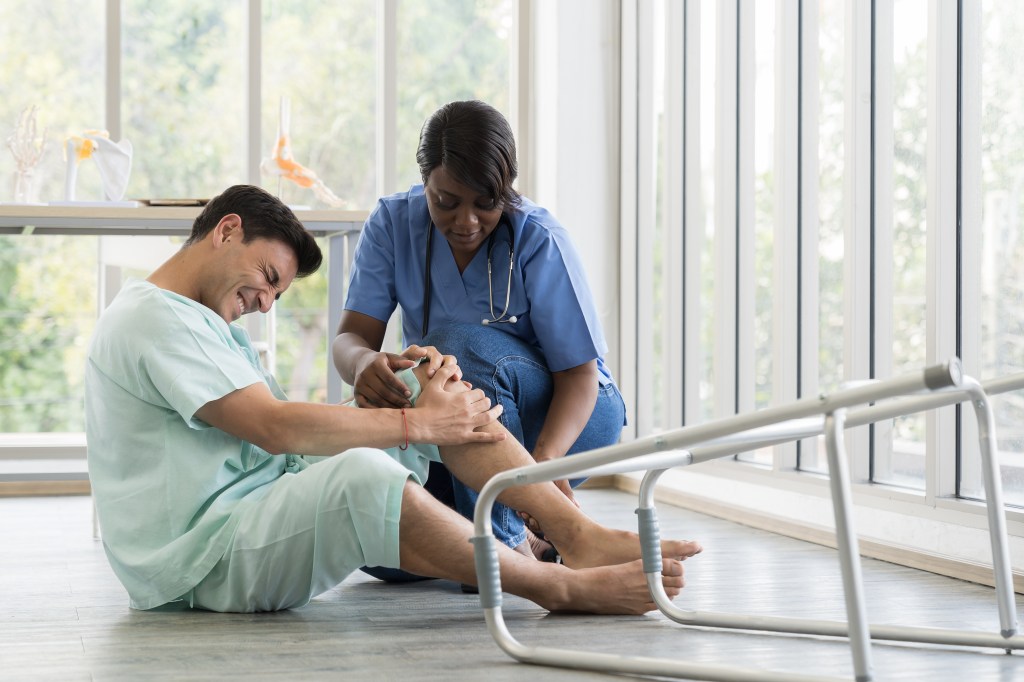
Falls are still one of the most persistent patient safety challenges facing the U.S. healthcare system.
- Despite annual competencies.
- Despite fall risk signs.
- Despite bed alarms, yellow socks, and documented teaching.
Rates of inpatient falls in U.S. hospitals are generally estimated to range from 3 to 5 falls per 1,000 bed-days, although rates vary depending on unit type and patient population.
With estimates ranging from hundreds of thousands to nearly one million falls each year, inpatient falls remain a common clinical problem and a significant source of preventable injury.
Pediatric inpatient fall rates are typically lower than adult rates but remain clinically important, with estimates ranging from 0.4 to 3.8 falls per 1,000 patient-days.
The question is not whether we are educating, because we are.
The question we should be asking is:
- Is our approach to fall prevention education appropriate to the reality of how falls occur?
Falls continue to occur in hospitals not because fall prevention efforts are absent, but because the way fall prevention education is commonly delivered does not match the behavioral realities of how falls actually occur.
The Real Reasons Fall Prevention Education Fails
1. Compliance Training Is Not the Same as Bedside Behavior
Annual modules and policy reviews document our adherence to the procedures and protocols we endorse. What they do not capture is the influence of the real-time judgments and actions clinicians make at the bedside.
Most inpatient falls occur during predictable high-risk windows:
- Nocturnal toileting hours (2200–0600) when lighting is reduced and staffing levels are lower.
- Immediately after medication administration, particularly sedatives, antihypertensives, and opioids.
- Post-therapy fatigue, especially in rehabilitation settings where patients may overestimate their endurance following therapy sessions.
- Shift transitions, when communication gaps or competing priorities may briefly reduce direct observation.
Effective fall prevention education must recognize these patterns and reframe fall prevention from a standardized list of precautions into an understanding of the actual risk windows.
For example, a patient who ambulated safely with therapy at 1400 may be significantly more unstable at 2100 after medication administration and cumulative fatigue.
Education that ignores these predictable risk patterns cannot effectively influence behavior.
Effective fall prevention education must therefore emphasize high risk times, not simply that risk exists.
Formal learning can never compete with the realities of bedside care.
The urgency of the work. Medical staff are busy.
The constant juggling of multiple priorities.
The fatigue that accumulates over a long shift.
And the inevitable lapses in concentration caused by continual interruptions.
According to the literature, multifaceted, system-level fall prevention interventions are more effective than educational interventions focused on a single cause.
In other words, even well-designed educational programs cannot reliably reduce fall rates if they operate in isolation from the workflow and the realities of patient care.
Annual modules and policy reviews confirm that we have documented the procedures and processes we endorse. What they do not reflect is the impact of the real-time decisions clinicians must make while managing a variety patient needs.
Education may support safe practice.
But it cannot replace the operational environment in which decisions are made.
2. Generic Education Misses Patient-Specific Risk
“We consider you a fall risk.”
This phrase appears in thousands of patient charts every day. Yet it often fails to resonate with the patient hearing it.
Why?
Because it lacks specificity.
Generic education assumes that simply informing patients they are a fall risk will influence behavior. In reality, fall risk is rarely perceived the same way by the patient as it is by the clinical team.
One important reason is that many patients at risk for falls are also experiencing cognitive changes that affect their perception of safety and ability.
Patients rarely fall because they do not understand that falling is dangerous.
More often, they fall because their internal assessment of their abilities does not match their actual physical capacity.
Several common clinical conditions contribute to this mismatch:
- Delirium, where attention, awareness, and judgment fluctuate throughout the day.
- Post-stroke impaired insight, particularly with right hemisphere injury, which can reduce awareness of weakness or balance deficits.
- Medication-related cognitive slowing, especially with sedatives, opioids, and some antihypertensives.
- Executive function impairment, which affects planning, hazard recognition, and impulse control.
For example, a patient experiencing mild delirium may understand fall precautions during morning rounds yet attempt to ambulate independently later when urgency arises.
Similarly, stroke patients may sincerely believe they can transfer safely despite significant weakness.
In these situations, education alone cannot correct the problem. The issue is not a lack of instruction — it is a mismatch between perceived ability and actual capacity.
Effective fall prevention therefore requires more than general warnings. Education must connect risk directly to the patient’s specific condition and circumstances.
Evidence shows wide variability in fall rates across unit types, underscoring that fall risk is contextual rather than universal.
When education is generic, patients often filter it out as routine hospital language.
Specific explanations are far more meaningful.
For example:
“Because your blood pressure drops when you stand and your right leg is weaker today, your brain may not react quickly enough if you lose balance.”
Specific risk is a believable risk.
3. Tools and Alarms Do Not Replace Judgment
Bed alarms, fall bracelets, and signage are important safeguards.
But they are not prevention strategies on their own.
Alarm fatigue reduces response urgency.
Over-reliance on technology can also inhibit clinical vigilance.
Staffing patterns such as lapses in concentration or multiple responsibilities influence response time.
When fall prevention is reduced to equipment alone, we unintentionally shift responsibility away from clinical judgment and interdisciplinary decision-making.
Technology can support safety.
It cannot replace situational awareness at the bedside.
4. Adult and Pediatric Falls Are Not the Same Problem
Adult Inpatient Falls
Common contributing factors include:
• Mobility impairment combined with overestimation of ability
• Urgent toileting without assistance
• Sedating medications or blood pressure changes
• Delirium or cognitive impairment
• Post-therapy fatigue in rehabilitation populations
In adult care, falls frequently occur during ambulation or transfers.
Fall prevention education fails when it focuses only on restricting movement — telling patients “don’t get up” — rather than building structured mobility plans that match the patient’s current functional capacity.
Pediatric Inpatient Falls
Pediatric patterns differ significantly.
Research shows:
• Many pediatric falls occur from beds or furniture.
• A large proportion occur with caregivers present.
• Caregiver fatigue, distraction, and unfamiliar hospital environments contribute to risk.
This changes the target of education.
In pediatric settings, fall prevention education must include:
• Caregiver-specific teaching
• Bed safety practices
• Realistic expectations of supervision
• Acknowledgment of parental exhaustion
Education directed only at the “patient” or without acknowledging caregiver – specifics misses the true behavioral driver.
What Actually Works Instead
Evidence suggests that fall prevention improves when organizations shift from policy-driven education to behavior-based, patient-centered systems.
1. Patient-Specific, Visible Plans
Patient-centered fall prevention tools embedded into clinical workflow — such as visual bedside plans developed collaboratively with patients — have demonstrated measurable reductions in fall rates.
When patients can clearly see:
• Their mobility level
• Required assist level
• Toileting plan
• High-risk times for instability
They are far more likely to engage in safe behavior.
2. Teach-Back and Return Demonstration
Handouts do not prevent falls.
Demonstration does.
Effective fall prevention education includes:
• Practicing transfers with supervision
• Demonstrating correct call-light use
• Verbalizing assist levels
• Repeating and reinforcing toileting plans
These techniques shift education from information delivery to behavior practice.
Behavior that is practiced is far more likely to be remembered.
For pediatric units:
- Demonstrating crib safety
- Teaching safe co-sleeping avoidance
- Clarifying supervision expectations
Fall prevention is not only about what we teach patients. It is also about how consistently the care team communicates expectations.
3. Cross-Disciplinary Consistency
Falls often occur when messaging differs between therapy and nursing.
If therapy says:
“You’re improving — try more independence.”
But nursing says:
“Call before getting up.”
The patient receives mixed cues.
When guidance differs across disciplines, patients are left to interpret conflicting instructions about their mobility and safety.
Successful programs align:
- Mobility stage
- Assist level
- Language used during handoff
- Documentation clarity
Consistency reduces decision confusion and reinforces safe behavior.
4. Rehab-Specific Considerations
Rehabilitation settings face unique fall risk challenges.
Patients are expected to mobilize.
Independence is the goal.
Progression requires challenge.
This creates tension between safety and recovery.
In rehab, fall prevention education fails when it:
- Discourages mobility rather than structuring it
- Fails to account for fatigue accumulation
- Ignores toileting urgency after therapy sessions
- Does not adjust assist levels daily
Rehab-focused prevention succeeds when it integrates:
- Mobility stage
- Assist level clarity
- Planned toileting strategy
- Instruction reinforced daily
- Team-wide language consistency
In other words, fall prevention must evolve as the patient progresses.
The MAP-IT Framework for Rehab Fall Prevention
To help organizations translate evidence into practice, one practical way to organize fall-prevention communication is the MAP-IT framework: Mobility stage, Assist level clarity, Planned toileting, Instruction that sticks, and Team consistency.
The MAP-IT framework is offered as a practical, behavior-based conceptual model to help teams align fall-prevention communication at the bedside; it is not intended to replace existing fall-risk assessment tools or institutional protocols.
M — Mobility Stage
What can the patient safely do today?
Mobility levels should be reassessed daily, particularly in rehabilitation settings where functional ability can change rapidly.
A — Assist Level Clarity
Is assistance required?
• One-person assist
• Two-person assist
• Device required
Assist levels must be communicated clearly and consistently across disciplines so that patients receive the same expectations from every member of the care team.
P — Planned Toileting
Scheduled, proactive toileting reduces urgency-driven falls, one of the most common triggers of inpatient falls.
Anticipating toileting needs decreases the likelihood that patients will attempt independent transfers.
I — Instruction That Sticks
Effective fall prevention education relies on teach-back and return demonstration, including:
• Transfer techniques
• Correct call-light use
• Assist level expectations
Practiced behavior is far more likely to be remembered than instructions delivered passively.
T — Team Consistency
Therapy, nursing, and support staff should use identical language when discussing mobility expectations, assist levels, and safety precautions.
Consistency during handoffs, bedside communication, and documentation reduces confusion and reinforces safe behavior.
Strategic Implications for Healthcare Leaders
Organizations seeking measurable reductions in fall rates should consider:
• Moving beyond reliance on annual education modules
• Embedding patient-specific visual plans at the bedside
• Aligning therapy and nursing communication
• Addressing caregiver behavior in pediatric units
• Targeting high-risk windows rather than relying solely on generic precautions
Fall prevention must be designed as a behavioral system, not simply a documentation task.
Closing Thoughts
Falls are rarely the result of a single lapse.
They reflect how well education, workflow, mobility progression, and team communication align within the care environment.
When fall prevention becomes specific, practiced, visible, and consistently reinforced, it moves from compliance to culture.
And culture reduces harm.
References
Agency for Healthcare Research and Quality. (n.d.). Falls. PSNet.
https://psnet.ahrq.gov/primer/falls
Bouldin, E. L., Andresen, E. M., Dunton, N. E., Simon, M., Waters, T. M., Liu, M., Daniels, M. J., Mion, L. C., & Shorr, R. I. (2013). Falls among adult patients hospitalized in the United States: Prevalence and trends. Journal of Patient Safety, 9(1), 13–17. https://doi.org/10.1097/PTS.0b013e3182699b64
Centers for Medicare & Medicaid Services. (2026). Hospital harm—Falls with moderate or major injury (CMS1017v2).
https://ecqi.healthit.gov/ecqm/hosp-inpt/2026/cms1017v2
Dykes, P. C., Burns, Z., Adelman, J., et al. (2020). Evaluation of a patient-centered fall-prevention toolkit to reduce falls and injuries: A nonrandomized controlled trial. JAMA Network Open, 3(11), e2025889.
https://doi.org/10.1001/jamanetworkopen.2020.25889
Miake-Lye, I. M., Hempel, S., Ganz, D. A., & Shekelle, P. G. (2013). Inpatient fall prevention programs as a patient safety strategy: A systematic review. Annals of Internal Medicine, 158(5 Pt 2), 390–396. https://doi.org/10.7326/0003-4819-158-5-201303051-00005
Morris, R., O’Riordan, S., & O’Connor, M. (2022). Interventions to reduce falls in hospitals: A systematic review and meta-analysis. Journal of Patient Safety. https://pmc.ncbi.nlm.nih.gov/articles/PMC9078046/
Parker, M. J., et al. (2020). Characteristics and contributing factors associated with pediatric inpatient falls. Journal of Pediatric Nursing. https://pubmed.ncbi.nlm.nih.gov/31678678/
Said, C. M., Batchelor, F., & Duque, G. (2021). Pediatric inpatient falls: Risk factors and prevention strategies. Journal of Pediatric Nursing. https://pmc.ncbi.nlm.nih.gov/articles/PMC8198772/
About the Author
Susan Sears, RN, BSN, CRRN, is a rehabilitation nurse and healthcare writer specializing in patient and staff education systems that improve clarity, compliance, and clinical outcomes. She partners with rehabilitation and home health organizations to develop education strategies that align safety practices with clinical workflow and quality metrics.
 Susan Sears Writings, LLC